Quick answer
The most effective treatments for nerve pain in legs after back surgery are: nerve pain medication (gabapentin or pregabalin), daily walking, proper sleep positioning, and ice or heat therapy. Physical therapy starting at 6–8 weeks also significantly reduces nerve pain.
What Helps Nerve Pain in Legs After Back Surgery?
Nerve pain in legs after back surgery is one of the most debilitating and distressing parts of recovery. The good news: there are effective strategies that significantly reduce it. Here are the six most evidence-backed approaches, in order of effectiveness.
1
Nerve pain medication (gabapentin or pregabalin)
Gabapentin (Neurontin) and pregabalin (Lyrica) are specifically designed for nerve pain. They work by reducing the abnormal electrical activity in irritated nerve fibers. Take exactly as prescribed — they require several days to reach therapeutic levels. Do not stop abruptly.
2
Walking — start the day after surgery
Walking reduces post-surgical inflammation, prevents scar tissue from forming around nerve roots, and stimulates nerve recovery. Start with 5–10 minute walks 3–4 times per day. Gradually increase. Walking is the single most important thing you can do for nerve pain recovery.
3
Sleep position — back with knees elevated
Sleep on your back with a pillow under your knees. This reduces pressure on the lumbar nerve roots and is often the single change that most improves nighttime nerve pain. Side sleeping with a pillow between knees is also effective.
4
Ice for the first 72 hours, then heat
Ice reduces acute nerve root inflammation in the first 3 days. After that, gentle heat on the low back and buttocks relieves muscle spasm that compresses irritated nerve roots. Never apply directly to the incision site.
5
Physical therapy at weeks 6–8
Once cleared by your surgeon, physical therapy addresses the muscle imbalances and movement patterns that perpetuate nerve irritation. Nerve mobilization techniques, used by skilled PTs, directly reduce nerve pain in the legs.
6
Nerve block injection (if pain persists)
If leg nerve pain persists beyond 8–12 weeks despite the above measures, a selective nerve root block injection can provide significant temporary relief — often 4–12 weeks — and help break the cycle of pain and muscle guarding.
Why Nerve Pain in Legs Happens After Back Surgery
Post-surgical nerve root inflammation
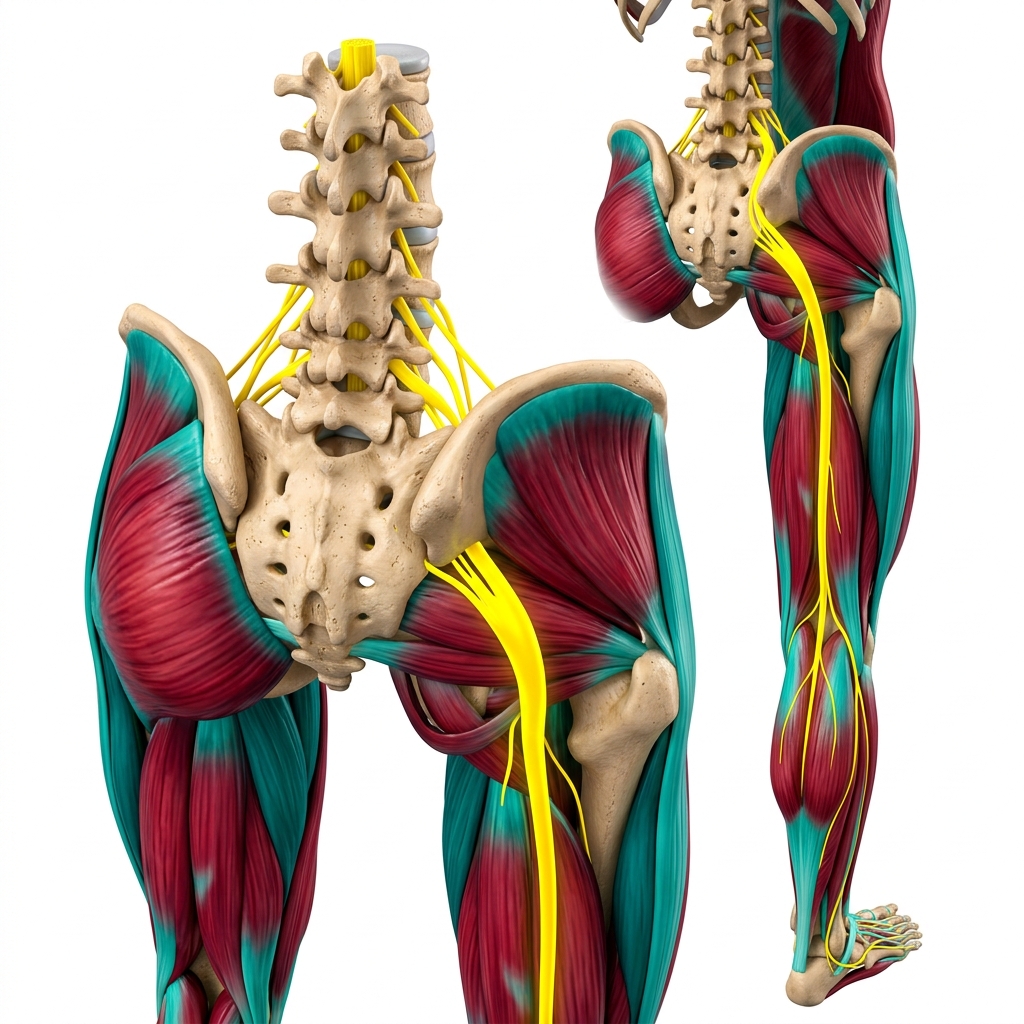
Back surgery — whether discectomy, laminectomy, or fusion — involves direct manipulation of the nerve roots. Even a successful operation causes temporary post-surgical inflammation around these nerves. This inflammation produces burning, shooting, tingling, and aching pain that travels down the distribution of the affected nerve root — typically down the buttock, thigh, calf, and sometimes into the foot.
The awakening nerve
When a nerve root has been compressed for months, it becomes dormant — its electrical activity is suppressed. After decompression surgery, the nerve "wakes up" and begins conducting again. This re-activation process is not pain-free. The recovering nerve produces intense electrical signals — burning, shooting, pins-and-needles — that can be more intense than the pre-surgical pain. This is a sign of healing, not failure.
Epidural scar tissue
As the surgical site heals, scar tissue forms in the epidural space around the nerve roots. In most patients this causes no problems. In some — particularly those with revision surgery or long-standing compression — the scar tissue creates ongoing nerve irritation that extends the pain beyond the typical 3-month window.
How Long Does Nerve Pain in Legs Last After Back Surgery?
Timeline
What to expect
Days 1–7
Intense nerve pain. Combination of pre-existing nerve injury and post-surgical inflammation. Peaks around day 3–5.
Weeks 1–4
Nerve pain may temporarily worsen before improving. Burning, tingling, and shooting sensations are common. This is the awakening nerve phase.
Weeks 4–8
Pain begins steady improvement. Burning and shooting sensations reduce in frequency and intensity. Walking distances increase.
Months 2–4
Most patients report significant reduction in nerve pain. Residual tingling or occasional shooting pain is common but manageable.
Months 4–6
Most nerve pain resolves completely. Some patients have mild residual sensitivity in the distribution of the affected nerve.
6–18 months
Patients with long-standing pre-surgical nerve compression may continue to have gradual improvement throughout this period.
Nerve Pain in Legs — Average Recovery Timeline
Average Patient-Reported Leg Nerve Pain (0–10 Scale)
Days 1–3
7.5/10
Week 3
6.5/10
Week 6
4.5/10
Month 3
2.5/10
Month 6
1.2/10
Month 12
0.5/10
Medications for Nerve Pain in Legs After Back Surgery
Medication
Type
Best for
Notes
Gabapentin (Neurontin)
Nerve pain med
Burning, shooting, tingling
Takes 3–7 days to work. Do not stop abruptly.
Pregabalin (Lyrica)
Nerve pain med
Burning, shooting, tingling
Faster onset than gabapentin. More expensive.
Acetaminophen (Tylenol)
Analgesic
Baseline pain control
Safe for regular use. Combine with nerve meds.
Ibuprofen (Advil)
NSAID
Inflammation reduction
Check with surgeon — may be restricted after fusion.
Duloxetine (Cymbalta)
SNRI antidepressant
Chronic nerve pain
Used when pain persists beyond 3 months.
Opioids
Narcotic
Severe acute pain
Short-term only. Taper as quickly as comfortable.
Important note on gabapentin:
Gabapentin is most effective when taken consistently at regular intervals — not just when pain spikes. Skipping doses significantly reduces its effectiveness for nerve pain.
Free Back Surgery Recovery Guide
Get a week-by-week guide to managing nerve pain after back surgery — reviewed by Dr. Abbasi.
Free. No spam. Unsubscribe any time.
Warning Signs: When Nerve Pain After Back Surgery Is Not Normal
Call your surgeon immediately if you experience:
Loss of bladder or bowel control — this is a surgical emergency (cauda equina syndrome)
New or worsening leg weakness — inability to lift your foot, or leg giving way
Fever above 101°F (38.3°C) with increased back pain — possible infection
Nerve pain that continues to worsen beyond week 6 with no improvement
New numbness in the groin or inner thigh area
FAQ: Nerve Pain in Legs After Back Surgery
What helps nerve pain in legs after back surgery?
The most effective treatments include nerve pain medications (gabapentin, pregabalin), daily walking starting the day after surgery, proper sleep positioning (back with knees elevated), ice then heat therapy, and physical therapy at weeks 6–8. Nerve block injections can help if pain persists beyond 8–12 weeks.
How long does nerve pain in legs last after back surgery?
Nerve pain in legs typically improves significantly within 6–12 weeks. Complete resolution takes 3–6 months for most patients. In cases of long-standing nerve compression before surgery, recovery may take up to 12–18 months.
Is burning leg pain normal after back surgery?
Yes. Burning leg pain is normal after back surgery and is a sign of nerve recovery. As compressed nerves regain their blood supply and begin to heal, they produce burning, tingling, and shooting sensations. This typically peaks at 2–6 weeks post-surgery and then gradually resolves.
When does nerve pain peak after back surgery?
Nerve pain after back surgery typically peaks around weeks 2–4. After this peak, pain should begin a steady downward trend. If pain continues to worsen beyond week 6, contact your surgeon.
Dr. Cyrus Abbasi, MD, PhD
Interventional Spine/Pain Management
Dr. Abbasi specializes in spinal surgery and nerve decompression procedures. She contributes to PainAfter.com to help patients understand nerve recovery after back surgery.