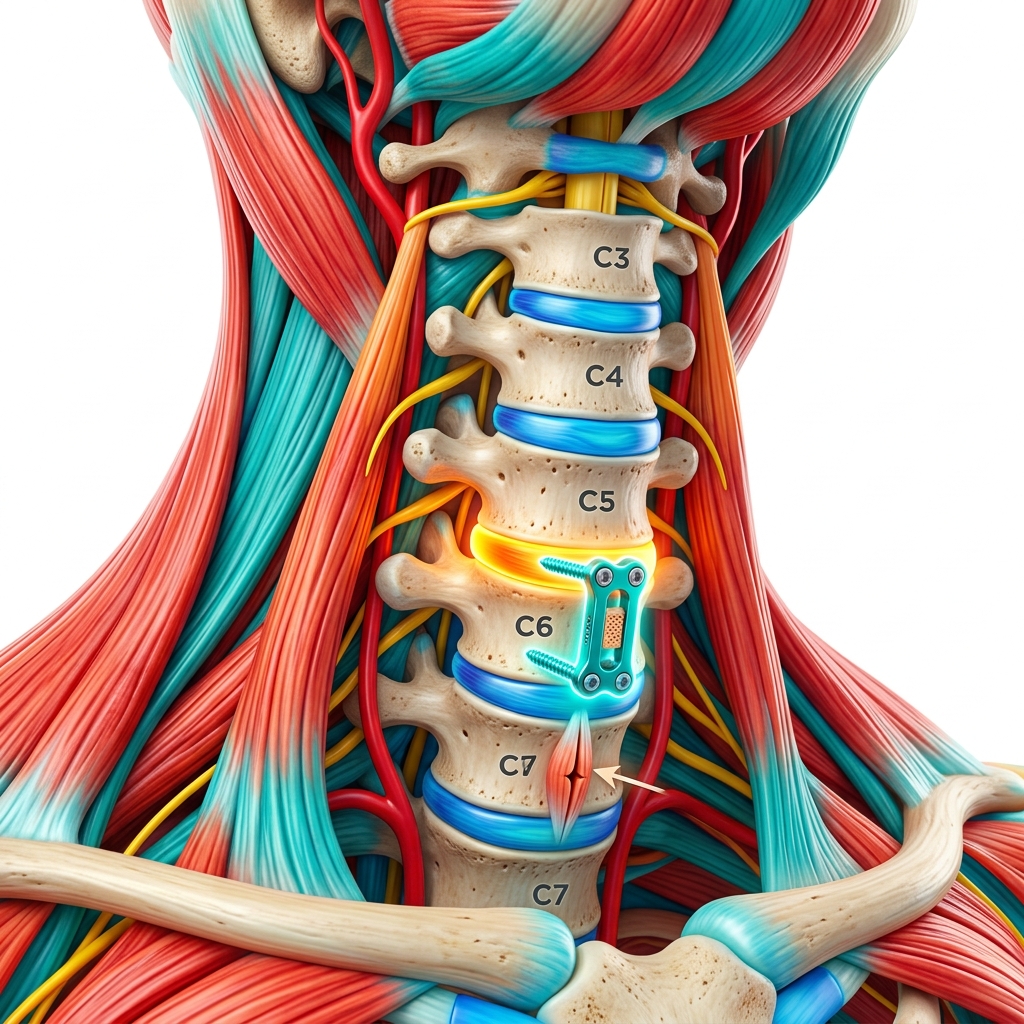
ACDF (anterior cervical discectomy and fusion) surgery removes a damaged disc in the neck and fuses the adjacent vertebrae. While the procedure relieves nerve compression, it creates a new set of temporary pain patterns — including shoulder and neck pain that many patients don't expect.
Why Do You Get Shoulder and Neck Pain After ACDF Surgery?
Nerve root irritation
ACDF surgery directly manipulates the nerve roots in the cervical spine. The C5 and C6 nerve roots — most commonly involved in ACDF — refer pain to the shoulder, upper arm, and shoulder blade. This is called referred pain, and it can feel just like a shoulder injury even though the source is in the neck.
Muscle spasm from surgical positioning
During ACDF surgery, your neck is held in a fixed extended position for 1–3 hours. This causes significant muscle strain in the cervical and upper thoracic muscles. The trapezius, levator scapulae, and rhomboid muscles — which connect the neck to the shoulder blade — are particularly affected. Post-operative muscle spasm in these areas is nearly universal.
Adjacent segment stress
After fusion, the vertebrae above and below the fused segment absorb more movement and load. This adjacent segment stress causes aching and stiffness in the neck that radiates to the shoulders, especially in the first few months after surgery.
Protective guarding
After any neck surgery, the muscles instinctively tighten to protect the fusion site. This guarding causes secondary shoulder and upper back pain that can persist for weeks, even when the surgical site itself is healing normally.
Shoulder Blade Pain After Cervical Fusion Surgery
Shoulder blade pain after cervical fusion surgery affects a significant number of patients and causes considerable concern — but it is almost always temporary.
Why the shoulder blade hurts after fusion
The C5 nerve root is the most common source of shoulder blade pain after ACDF. This nerve root runs from the cervical spine to the shoulder and upper arm, with branches that refer pain to the medial border of the shoulder blade. When this nerve root is irritated by post-surgical inflammation, it produces a deep aching pain felt in the shoulder blade.
How long does shoulder blade pain last after cervical fusion?
For most patients, shoulder blade pain improves significantly within 6–8 weeks as post-surgical inflammation resolves. Complete resolution can take 3–6 months as the nerve roots fully recover. If it persists beyond 6 months or worsens, it should be evaluated for adjacent segment disease or incomplete nerve recovery.
Shoulder Pain After ACDF Surgery — Week-by-Week Timeline
| Phase | Timeline | What to expect |
|---|---|---|
| Acute phase | Days 1–7 | Intense neck and shoulder pain. Muscle spasm from positioning. Nerve block wearing off 12–24 hours post-op. |
| Early recovery | Weeks 1–3 | Pain begins to improve. Muscle spasm gradually releases. Nerve pain may feel unchanged or temporarily worse. |
| Nerve settling | Weeks 3–8 | Shoulder and neck pain progressively decreases. Referred shoulder blade pain improves. |
| Active recovery | Months 2–4 | Physical therapy begins. Nerve-related symptoms continue to improve. Most patients return to desk work. |
| Full recovery | Months 4–6 | Residual aching resolves for most patients. Return to full activities cleared by surgeon. |
Average Pain Scale After ACDF Surgery
Average pain ratings reported by patients in published clinical studies on ACDF recovery. Individual scores will vary.
How to Manage Shoulder and Neck Pain After ACDF at Home
Collar use and posture
Your surgeon may prescribe a cervical collar for 2–6 weeks after ACDF surgery. Wear it as directed — it protects the fusion site and reduces muscle strain. When the collar is removed, focus on neutral neck posture: ears directly above your shoulders, chin slightly tucked. Avoid prolonged forward head posture (looking down at a phone or laptop).
Heat vs. ice
Use ice for the first 72 hours to reduce acute inflammation — 15 minutes on, 45 minutes off. After the first 3 days, gentle heat is often more effective for muscle spasm relief. Never apply heat or ice directly to the incision site.
Sleep position
Sleep on your back with a cervical pillow that supports the natural curve of your neck. Avoid sleeping on your stomach — it forces the neck into rotation and can stress the fusion. Side sleeping with a pillow between the knees is acceptable if back sleeping is uncomfortable.
Physical therapy exercises
- Gentle range-of-motion exercises — slow, controlled neck movements within a pain-free range
- Scapular stabilization exercises — strengthen the muscles that support the shoulder blade
- Postural retraining — correct forward head posture that stresses the fusion
- Progressive strengthening — rebuild neck and shoulder strength at months 3–6
Normal Symptoms vs. Red Flags After ACDF
Expected symptoms — these are normal
- Radiating shoulder ache and shoulder blade pain for up to 3 months
- Neck stiffness, especially in the morning
- Difficulty turning your head fully for 4–8 weeks
- Swallowing difficulty (dysphagia) for 1–4 weeks
- Hoarse voice for 1–2 weeks
- Temporary increase in arm tingling during nerve healing
- New or worsening weakness in your arms or hands
- Difficulty swallowing that worsens after day 14
- Fever above 101°F (38.3°C)
- Sudden severe increase in neck pain
- New numbness or tingling not present before surgery
- Discharge or increasing redness at the incision site
FAQ: Shoulder and Neck Pain After ACDF Surgery