
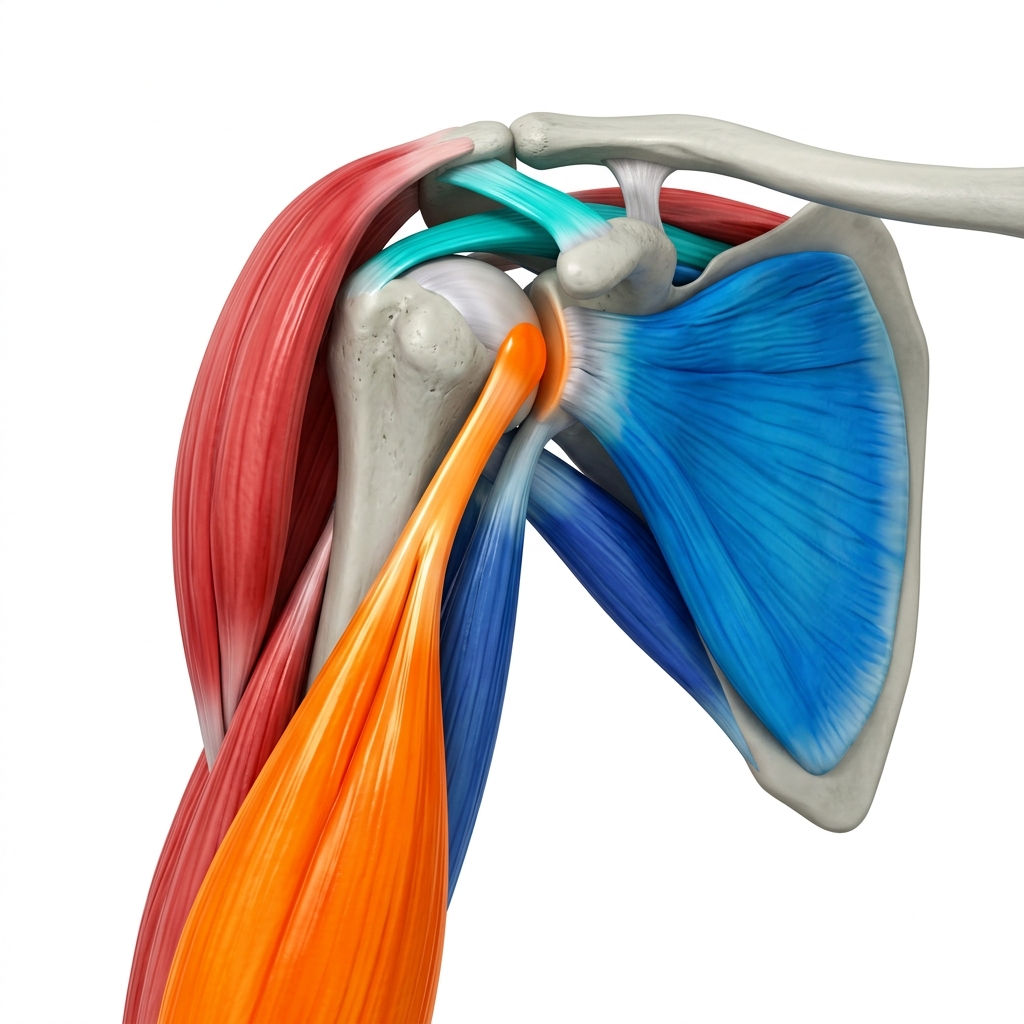
Shoulder pain after bicep tendon surgery is one of the most common concerns patients have after their procedure. The good news: in most cases it is a normal part of healing. Understanding what causes it and what to expect helps you recover with confidence.
What Causes Shoulder Pain After Bicep Tendon Surgery?
Shoulder pain after bicep tendon surgery comes from several sources — not just the repair site itself. Your surgeon made an incision, moved muscle tissue, and anchored the tendon to bone. All of this causes a cascade of normal healing responses.
Tendon repair healing process
The repaired bicep tendon goes through three phases of healing: inflammation (weeks 1–3), proliferation (weeks 3–8), and remodeling (months 2–6). During each phase, different types of pain are normal. Early-phase pain is sharp and localized. Later-phase pain is a deeper, diffuse aching.
Nerve sensitivity after surgery
Surgery causes local nerve irritation. Small nerve fibers around the shoulder become hypersensitive during healing — a process called peripheral sensitization. This can cause burning, tingling, or shooting pain that feels disproportionate to the injury. It typically resolves within 6–10 weeks.
Scar tissue formation
As the repair heals, scar tissue forms around the tendon and joint capsule. This tissue is less flexible than normal tissue and causes stiffness and a pulling sensation — especially during physical therapy when you begin range-of-motion exercises.
Muscle guarding and disuse
After surgery, the muscles around your shoulder instinctively tighten to protect the repair. This protective guarding, combined with weeks of limited movement, causes secondary muscle pain in the trapezius, rotator cuff, and neck.
How Long Does Shoulder Pain Last After Bicep Tendon Surgery?
| Phase | Timeline | What you feel |
|---|---|---|
| Acute pain | Days 1–7 | Sharp, intense pain at the repair site. Nerve block wears off 12–18 hrs post-op. |
| Inflammatory phase | Weeks 1–3 | Throbbing, swelling, warmth. Pain peaks around day 3–5 then gradually improves. |
| Stiffness phase | Weeks 3–8 | Dull aching, pulling during movement. PT starts and may cause temporary flares. |
| Rebuilding phase | Months 2–4 | Soreness after PT sessions. Strength exercises begin. Most daily activities resume. |
| Final recovery | Months 4–6 | Residual stiffness fades. Return to full activity cleared by surgeon. |
Average Pain Scale by Phase
The chart below shows average pain ratings reported by patients after bicep tendon repair. Individual scores will vary.
How to Relieve Shoulder Pain After Bicep Tendon Surgery
Ice and elevation
Apply ice for 15–20 minutes every 2–3 hours during the first 3 weeks. Wrap the ice pack in a cloth — never apply directly to skin. Keep your arm elevated above heart level when resting to reduce swelling.
Best sleeping positions
Sleeping is one of the hardest parts of recovery. The best positions are:
- Reclined at 45° — reduces pressure on the shoulder joint
- On your back with a pillow under the operated arm for support
- Avoid sleeping on the operated side for at least 6 weeks
Pain medication options
- Acetaminophen (Tylenol) — safe for regular use, good for baseline pain control
- Ibuprofen (Advil) — reduces inflammation; check with your surgeon as some protocols limit NSAID use in early healing
- Avoid opioids beyond the first week unless directed by your surgeon
Physical therapy exercises
- Pendulum exercises (weeks 2–4)
- Passive range-of-motion (weeks 3–6)
- Active-assisted exercises (weeks 6–12)
- Strengthening (months 3–6)
Warning Signs: When Shoulder Pain Is Not Normal
- Fever above 101°F (38.3°C) with increased redness at the incision
- Sudden sharp increase in pain after a period of improvement
- Visible "Popeye" bulge — may indicate re-rupture
- Numbness or tingling spreading down the arm to the hand
- Discharge or odor from the incision site