What Causes Pain After Umbilical Hernia Surgery?
Mesh vs. primary repair — which hurts more?
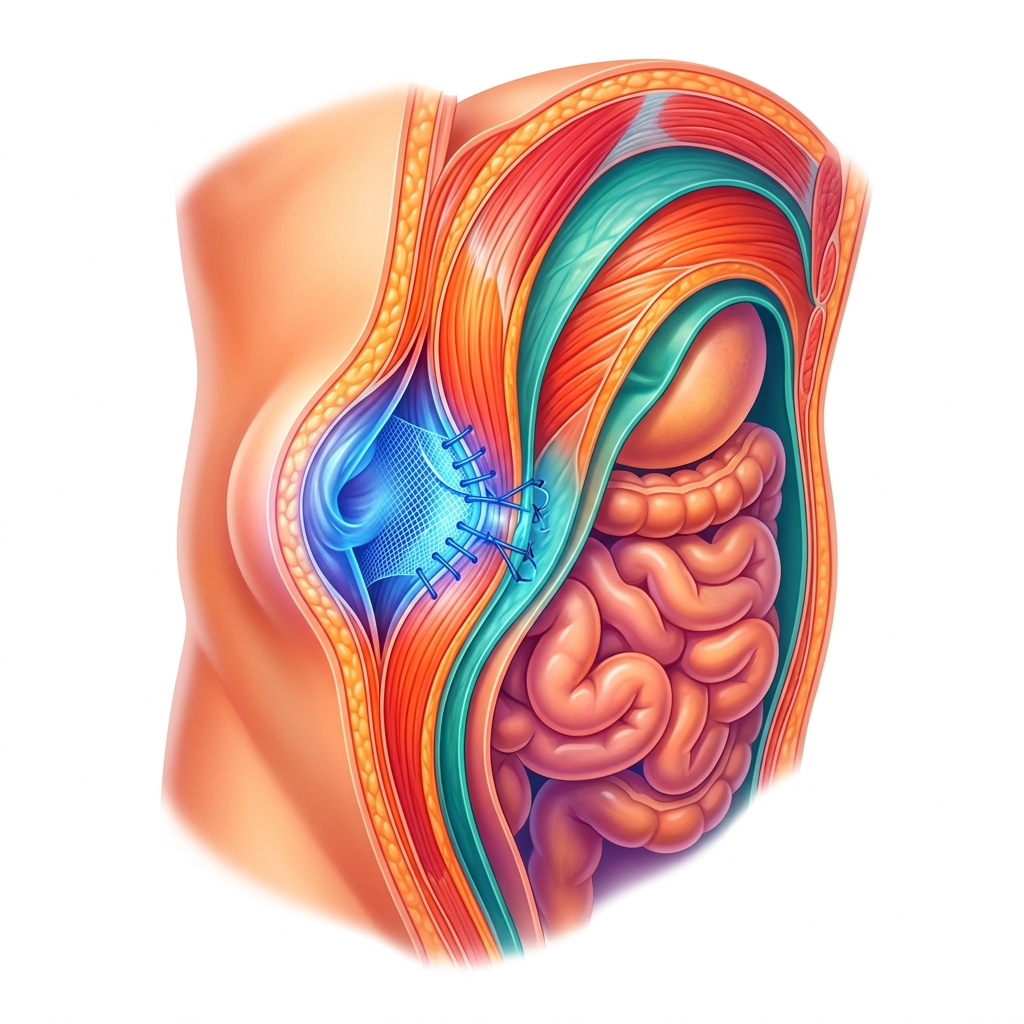
Umbilical hernias can be repaired in two ways: primary closure (suturing the defect closed without mesh) or mesh repair (placing a synthetic mesh to reinforce the closure). Both cause similar amounts of immediate post-operative pain. Mesh repairs may have slightly more discomfort in the first 4–6 weeks as the mesh integrates, but have a significantly lower recurrence rate — particularly for defects larger than 2 cm.
Why the belly button area is especially sensitive
The umbilicus is one of the most nerve-rich areas of the abdominal wall. The small nerves that supply it — branches of the thoracoabdominal nerves — are inevitably affected by umbilical hernia repair. This causes the characteristic sensitivity around the belly button that many patients describe as burning, itching, or sharp pain with touch in the first 3–6 weeks after surgery.
Additionally, the skin around the belly button has very little subcutaneous fat, meaning the incision is close to the muscle and peritoneum. This makes the area more sensitive than an incision in the lower abdomen would be.
Pain Timeline After Umbilical Hernia Repair
| Phase | Timeline | What to expect |
|---|---|---|
| Acute pain | Days 1–7 | Moderate to significant pain around the belly button. Worse with any abdominal movement — coughing, laughing, rising from bed. |
| Pulling and stiffness | Weeks 2–4 | Sharp pain reduces to pulling and stiffness. Sensitive to touch around incision. Sitting up from lying down still uncomfortable. |
| Residual sensitivity | Weeks 4–6 | Mild tenderness around the belly button. Most daily activities possible. Vigorous activity still restricted. |
| Full recovery | Weeks 6–8 | Most patients fully recovered. Mesh repair patients may have mild occasional pulling for up to 3 months. |
How to Manage Pain After Umbilical Hernia Surgery at Home
Activity restrictions
- Week 1–2: Rest, short walks only. No lifting over 5–10 lbs. No driving if on opioid medication.
- Week 2–4: Light activity. No lifting over 10–15 lbs. Short walks increasing daily.
- Week 4–6: Return to most activities. Still avoid heavy lifting and vigorous exercise.
- Week 6+: Full activity including exercise, as cleared by surgeon.
Abdominal binder — does it help?
Yes. An abdominal binder worn snugly around the abdomen significantly reduces pain after umbilical hernia surgery. It supports the repaired area, reduces movement of the incision, and decreases swelling. Most surgeons recommend wearing it for 2–4 weeks. Wear it during activity but you can remove it when lying down if it is uncomfortable.
Pain medication guide
- Acetaminophen (Tylenol) — 500–1000mg every 6 hours; effective for baseline pain control
- Ibuprofen (Advil) — 400–600mg every 6–8 hours with food; reduces inflammation
- Stool softener (docusate sodium) — essential for the first 2 weeks to prevent straining during bowel movements, which dramatically increases pain
- Opioids — if prescribed, use only as needed and taper off within 1 week
Warning Signs After Umbilical Hernia Surgery
- Fever above 101°F — possible infection
- Increasing redness, warmth, or discharge at the belly button incision
- A new bulge appearing at or near the belly button — possible recurrence
- Pain that is worsening rather than improving
- Nausea, vomiting, and severe pain — possible bowel obstruction (emergency)
FAQ: Pain After Umbilical Hernia Surgery