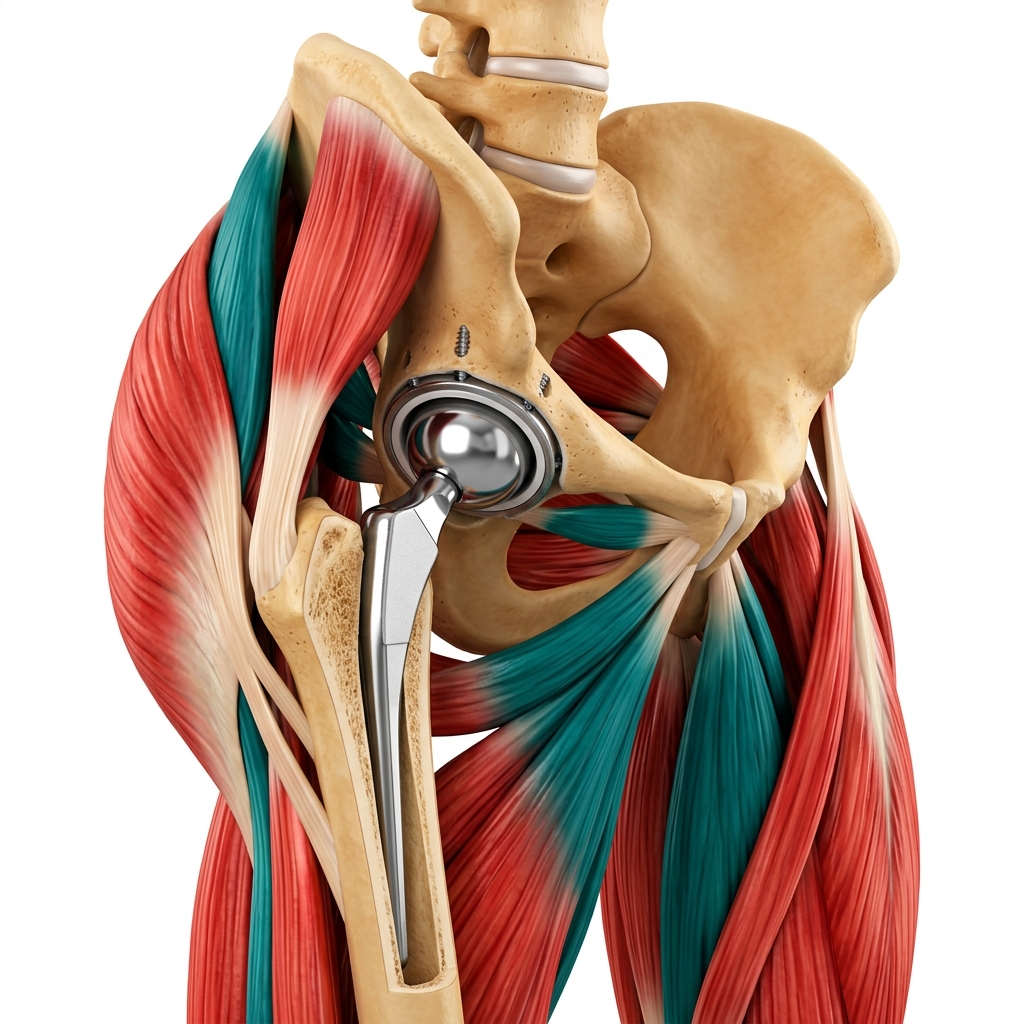
Hip replacement surgery is one of the most successful procedures in orthopedics — over 90% of patients report significant improvement in pain and function. But recovery is not without discomfort. Understanding what pain is normal versus what requires attention helps you recover with confidence.
What Is Normal Pain After Hip Replacement Surgery?
Acute post-op pain: days 1–7
The first week after hip replacement is the most painful. Your surgeon removed a severely damaged joint and replaced it with a metal-and-plastic implant. The muscles, tendons, and surrounding tissues have been cut, stretched, and repaired. Intense aching, throbbing, and soreness in the hip, groin, and thigh is completely expected. Pain is managed with a combination of prescribed opioids, acetaminophen, and nerve blocks. Walking begins on day 1 in most protocols — with a walker and physical therapist support.
Inflammatory phase: weeks 2–6
As the surgical wound heals, the body's inflammatory response peaks and then gradually subsides. During this phase, most patients experience: deep aching in the hip and thigh that is worse with activity, stiffness — particularly in the morning or after sitting, muscle soreness after physical therapy sessions, and occasional sharp pain with specific movements like rising from a chair or climbing stairs.
Rebuilding phase: months 2–4
By month 2, most patients are significantly more mobile. Pain during this phase is primarily exercise-related — soreness after PT, aching after longer walks, and occasional sharp pain when pushing the limits of range of motion. The muscles around the hip are rebuilding after months or years of pre-surgical weakness and disuse. PT soreness at this stage is a sign of progress.
Thigh Pain After Hip Replacement Surgery
Why the thigh hurts after hip replacement
Thigh pain after hip replacement — a deep, aching pain in the mid-thigh — is one of the most commonly reported and least explained symptoms after this surgery. It is caused by the femoral stem of the hip implant. During hip replacement, a metal stem is inserted into the femur (thigh bone). As the bone heals and grows around this stem over the first 3–6 months, it produces a specific pain pattern: a dull, constant aching deep in the thigh that is worse with weight bearing and activity.
This is called "stress shielding" or "thigh pain related to stem fixation" and affects up to 20% of hip replacement patients. It is not a sign of implant failure — it is the normal process of bone remodeling around the implant.
How long does thigh pain last after hip replacement?
Thigh pain after hip replacement typically peaks at 4–8 weeks post-surgery and then gradually resolves as the bone integrates with the implant. Most patients see significant improvement by month 3 and complete resolution by month 6. In a small number of patients with cementless implants, thigh pain can persist for up to 12 months before fully resolving.
Pain Scale by Phase After Hip Replacement
Week-by-week pain timeline
| Timeline | Location | Type | Normal? |
|---|---|---|---|
| Days 1–7 | Hip, groin, thigh | Intense aching, throbbing | ✓ Normal |
| Weeks 2–6 | Hip, thigh | Deep aching, stiffness, PT soreness | ✓ Normal |
| Months 2–4 | Thigh, occasional groin | Dull aching with activity | ✓ Normal |
| Months 4–6 | Mild thigh residual | Occasional aching after exertion | ✓ Normal |
| Any time | Hip + fever/swelling | Increasing pain + systemic symptoms | ⚠ Call surgeon |
Warning Signs vs. Normal Symptoms
- Deep thigh aching that is worse with weight bearing
- Groin aching when walking or climbing stairs
- Clicking or clunking sounds with movement
- Morning stiffness lasting less than 30 minutes
- Increased soreness after PT sessions (lasting less than 24 hours)
- Mild swelling around the knee and ankle (from lying down)
- Fever above 101°F with increasing hip pain or redness
- Sudden severe increase in pain after a period of improvement
- Feeling that the hip has "given way" or dislocated
- One leg becoming noticeably shorter than the other
- Calf swelling, redness, or warmth — possible DVT (blood clot)
- Discharge or increasing redness at the incision site
FAQ: Normal Pain After Hip Replacement Surgery