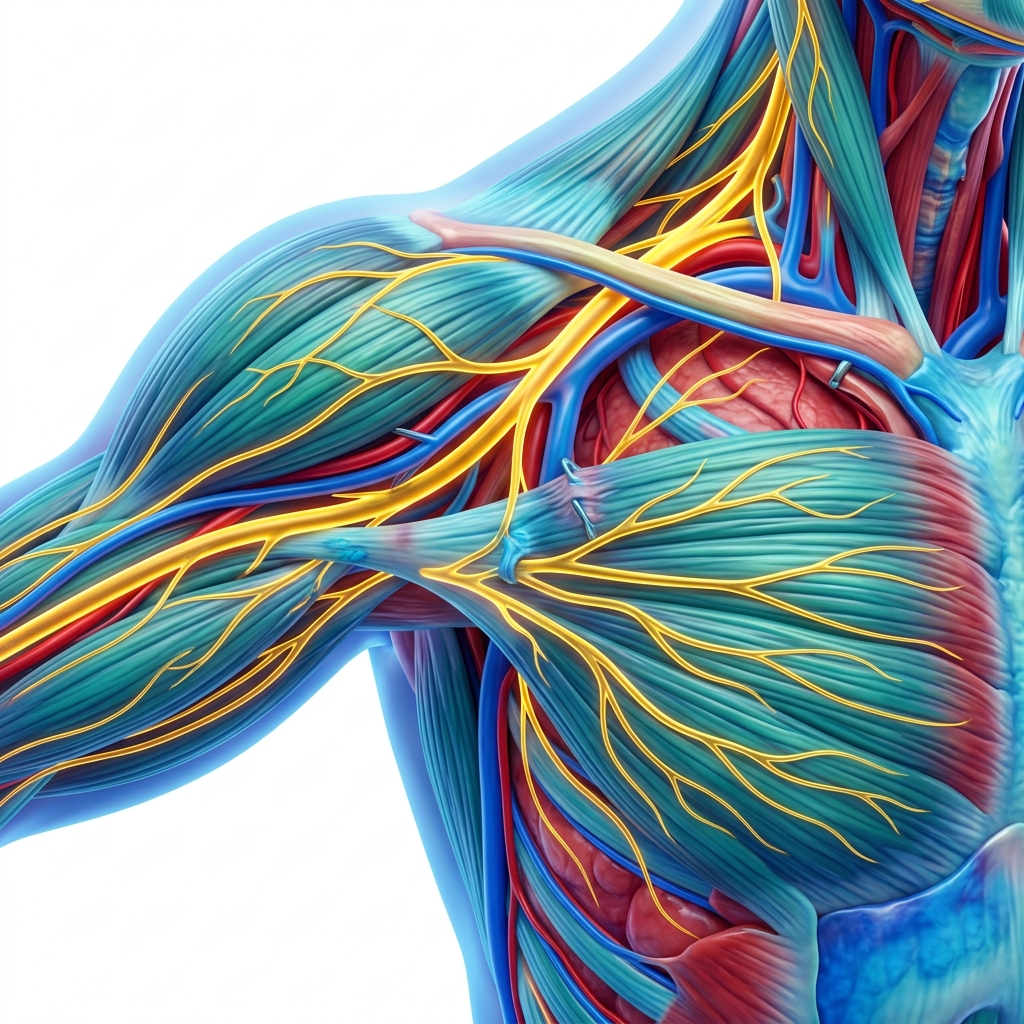
Nerve pain after surgery — characterized by burning, shooting, tingling, or electric sensations — affects a significant number of surgical patients. It is one of the most distressing parts of recovery, yet one of the least discussed. Understanding what causes it, and what helps, makes recovery far more manageable.
What Causes Nerve Pain After Surgery?
Peripheral sensitization — why nerves become hypersensitive
Surgery causes direct tissue damage and triggers an inflammatory response. This inflammation produces chemicals — prostaglandins, bradykinin, substance P — that sensitize the small nerve fibers in the surgical area. These sensitized fibers fire more easily and more intensely than normal, producing pain that feels disproportionate to the actual tissue damage. This process is called peripheral sensitization and is the primary driver of nerve pain in the first 4–8 weeks after surgery.
Surgical nerve injury vs. normal nerve irritation
There is an important distinction between normal post-surgical nerve irritation and actual nerve injury:
- Normal nerve irritation — the nerve is intact but inflamed and hypersensitive. Temporary burning and tingling that resolves as inflammation subsides.
- Nerve injury (neuropraxia) — the nerve is stretched, compressed, or bruised during surgery but not severed. Recovery takes weeks to months.
- Nerve damage (axonotmesis/neurotmesis) — partial or complete nerve fiber damage. Less common, may require specialist evaluation.
Which surgeries cause the most nerve pain?
| Surgery type | Nerve pain risk | Most affected area |
|---|---|---|
| Spinal fusion / discectomy | High | Legs, buttocks, feet |
| Hernia repair (inguinal) | High | Groin, inner thigh |
| Knee replacement / ACL repair | Moderate | Knee, lower leg, foot |
| Shoulder surgery | Moderate | Shoulder, upper arm |
| Hip replacement | Moderate | Thigh, knee, foot |
| Foot & ankle surgery | Moderate–High | Foot, toes, ankle |
| Carpal tunnel release | Low–Moderate | Hand, fingers |
How to Treat Nerve Pain After Surgery
Nerve pain medications — gabapentin, pregabalin, duloxetine
Nerve pain does not respond well to standard pain medications like ibuprofen or acetaminophen alone. It requires medications that specifically target nerve signal transmission:
- Gabapentin (Neurontin) — the most commonly prescribed nerve pain medication after surgery. Takes 3–7 days to reach full effect. Take consistently; do not stop abruptly.
- Pregabalin (Lyrica) — faster onset than gabapentin, more predictable absorption. More expensive but often more effective for acute nerve pain.
- Duloxetine (Cymbalta) — an SNRI with strong evidence for chronic nerve pain persisting beyond 3 months.
- Topical lidocaine — a lidocaine patch applied to the painful area can provide localized relief without systemic side effects.
Physical therapy and nerve mobilization
Physical therapy plays a critical role in nerve pain recovery after surgery. A skilled PT uses nerve mobilization techniques — gentle, specific movements that slide and tension the nerve along its path through the body. This prevents scar tissue from forming around the nerve, maintains nerve mobility, and gradually desensitizes hypersensitive nerve fibers.
Ice, heat and home relief strategies
- Ice — most effective for acute nerve inflammation in the first 72 hours. 15 minutes on, 45 minutes off.
- Heat — more effective for chronic nerve sensitivity after the acute phase.
- Elevation — for nerve pain in the limbs, keeping the affected limb elevated above heart level reduces inflammation and swelling that pressures nerve fibers.
- Gentle movement — nerve fibers require movement to heal. Complete immobilization worsens nerve pain.
- Desensitization — gently touching the painful area with different textures helps retrain the nervous system to interpret normal touch as non-painful.
How Long Does Nerve Pain Last After Surgery?
Nerve recovery is slow — nerve fibers regenerate at approximately 1mm per day, or about 1 inch per month. For most post-surgical nerve pain however, the cause is inflammation rather than structural nerve damage, and recovery is much faster.
| Timeline | What to expect |
|---|---|
| Days 1–7 | Acute nerve irritation. Burning, tingling, shooting pain. Peaks around day 3–5. |
| Weeks 1–4 | Pain may temporarily worsen as nerves "awaken." Gabapentin most important during this phase. |
| Weeks 4–8 | Pain begins steady improvement. Burning reduces. Tingling may persist but is less intense. |
| Months 2–4 | Most patients have significant reduction. Residual occasional shooting or tingling is common. |
| Months 4–6 | Most nerve pain resolves completely. Some patients have mild residual sensitivity. |
| 6–18 months | Patients with structural nerve injury or long-standing pre-surgical compression continue gradual improvement. |
Average Nerve Pain Timeline After Surgery
Factors that affect nerve recovery speed
- Duration of pre-surgical compression — nerves compressed for years recover more slowly
- Age — younger patients generally have faster nerve regeneration
- Diabetes — diabetic neuropathy slows nerve healing significantly
- Smoking — reduces blood supply to nerves and slows healing
- Early movement — patients who begin gentle walking early have faster nerve recovery
Warning Signs: When Nerve Pain After Surgery Is Not Normal
- Nerve pain that continues to worsen beyond week 6 with no improvement
- New or progressive weakness in the affected limb
- Complete numbness in a specific area (not just tingling)
- Nerve pain combined with fever above 101°F — possible infection
- Loss of bladder or bowel control — emergency, seek immediate care
FAQ: Nerve Pain After Surgery